
How can Ukrainian municipalities turn their climate-neutrality ambitions and recovery priorities into projects that attract investment? This was the central question addressed during SUN4Ukraine’s Investment, Funding and Finance Planning Workshop, held in Warsaw on 21–22 October 2026.
The two-day workshop brought together representatives of SUN4Ukraine’s 12 Flagship Municipalities, project partners and leading international financial and development institutions, including the European Bank for Reconstruction and Development (EBRD), the International Finance Corporation (IFC), the International Bank for Reconstruction and Development (IBRD), Bank Gospodarstwa Krajowego (BGK) and the United Nations Development Programme (UNDP). The cities of Warsaw and Oslo joined to share their own experience.
Through presentations, financing roundtables and sector-based discussions on buildings, waste and public transport, participants explored conditions needed to turn investment priorities into viable projects through practical questions such as how to finance school renovation without direct project income, how to procure electric buses and how to keep waste and water utilities financially sustainable after investment.
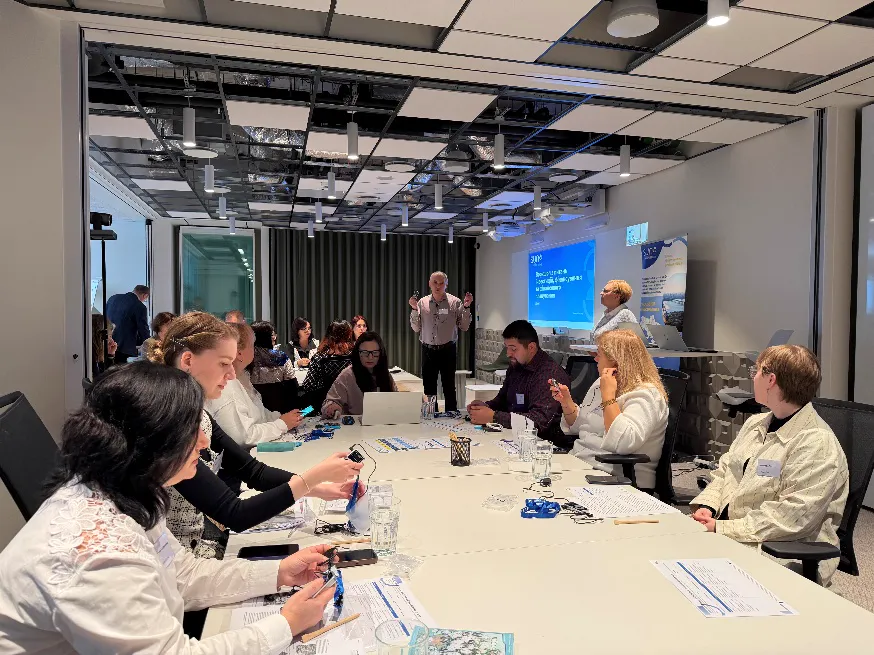
Discussion among workshop participants
From funding opportunities to financeable projects
For Ukrainian municipalities, the challenge is not only to identify investment opportunities, but to pursue them while maintaining essential services, responding to war damage and working with constrained budgets and limited preparation capacity.
Municipalities need well-prepared projects supported by credible cost estimates, feasibility studies, clear implementation responsibilities and realistic financing structures. This also means identifying expected operating costs, potential revenues or subsidies, available municipal contributions and repayment capacity, as well as any outstanding preparation needs.
Discussions with financial institutions highlighted the importance of engaging potential funders early, well before projects are fully developed, to clarify eligibility requirements and identify technical assistance needs. Rather than seeking a single funding solution, municipalities explored how different sources can be combined to reflect each project’s public benefits, revenue potential and risks, while remaining affordable for the city over time.
Financial institutions also shared practical advice on how municipalities can move their projects forward:
- Focus on a small number of priority investments. The EBRD encouraged municipalities to concentrate preparation resources on two or three projects, register proposals in the DREAM system from the concept stage and contact the bank early to discuss potential financing and technical assistance.
- Check eligibility and municipal contribution requirements early. BGK highlighted the importance of aligning projects with relevant sectoral and investment plans, demonstrating their financial credibility and understanding programme conditions, including co-financing requirements.
- Be clear about who will borrow and deliver the project. IFC stressed the importance of identifying the appropriate borrower and implementing entity. Financial institutions also need evidence of technical feasibility, financial sustainability and the municipality’s ability to meet operating and repayment obligations.
- Understand how international financing is channeled. IBRD support is typically coordinated through national government. Municipalities should therefore engage relevant national authorities when exploring these financing routes.

Panel discussion with representatives of financial institutions
Learning from EU Mission Cities
The workshop also offered opportunities to learn from the experiences of Oslo and Warsaw. Oslo illustrated how climate budgeting can connect emissions-reduction measures with funding decisions, responsible departments and regular follow-up. Warsaw demonstrated how coordinated preparation across municipal buildings can bring technical, financial and organisational expertise together, creating common standards that support future investments.
The lesson for Ukrainian cities is not to copy instruments developed under very different fiscal conditions, but to adopt the underlying discipline: linking climate commitments to budget decisions, clear ownership and coordinated preparation across a portfolio of projects.
Connecting investment planning with Climate Neutrality Plans
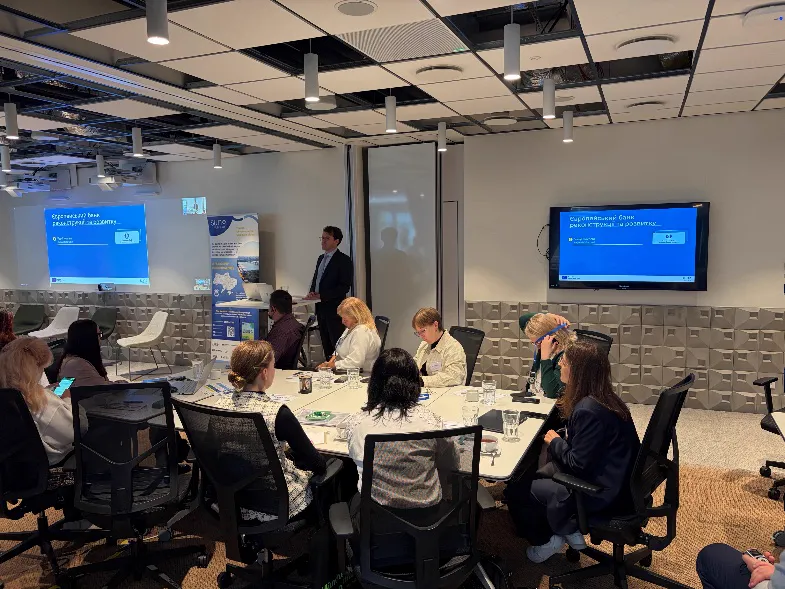
Roundtable discussion with financial institutions on funding opportunities and requirements
On the second day, a practical project-structuring exercise allowed city teams to test their own priority investments, identify preparation gaps, explore suitable financing options and define next steps. Discussions highlighted the importance of prioritising projects based on urgent community needs, expected benefits, resilience, strategic alignment and readiness, so that limited municipal resources can be directed towards a focused pipeline of high-impact investments.
The discussions also highlighted the importance of connecting financial planning with the financial and implementation chapters of municipal Climate Neutrality Plans (CNPs). These plans should link climate priorities to available resources, funding gaps, repayment capacity, project ownership and realistic implementation pathways.
Ultimately, the workshop reinforced a central message: Ukrainian municipalities already have important climate and recovery priorities. The next step is to strengthen the financial planning, project preparation and partnerships needed to turn these priorities into investments that deliver lasting benefits for their communities.
By facilitating direct exchanges with financial institutions and sharing practical experience from EU Mission Cities, SUN4Ukraine continues to help its Flagship Municipalities strengthen their capacity to finance and implement climate-neutral reconstruction.

SUN4Ukraine’s Investment, Funding and Finance Planning Workshop participants