
Waste collection, reliable water supplies and protection from extreme heat are practical concerns that shape residents’ daily lives. They also reveal how cities can prepare for a more sustainable and resilient future.
From 23 to 25 September 2026, representatives of the Ukrainian Flagship Municipality of Pervomaisk visited Parma, Italy, as part of the SUN4Ukraine Partnership Programme. Over three days, the two cities exchanged experience on waste management, water and wastewater services, climate adaptation and sustainable agriculture, while exploring how local solutions could be adapted to different contexts.
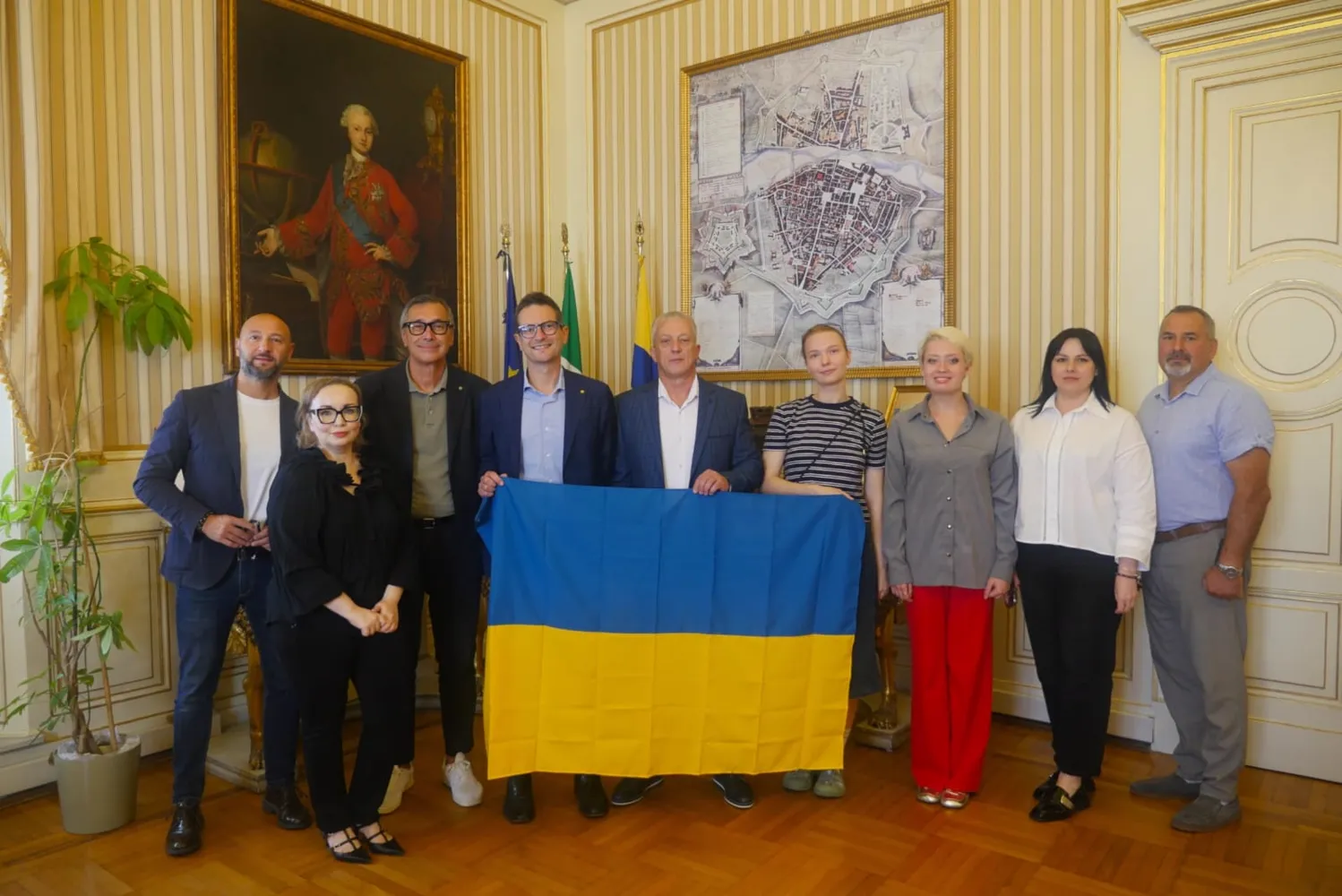
The Pervomaisk delegation meets with the Mayor of Parma in the city hall
Parma is one of the cities participating in the EU Mission for 100 Climate-Neutral and Smart Cities and has committed to achieving climate neutrality by 2030. Its approach brings together public authorities, businesses, research institutions and civil society through its Climate City Contract.
For Pervomaisk, the study visit offered an opportunity to see how Parma translates its climate and environmental ambitions into practical policies and services. For Parma, it provided a chance to learn more about the realities facing a Ukrainian municipality and the ways in which Pervomaisk is maintaining essential services and adapting to climate and wartime pressures.
From waste management to resource efficiency
The study visit began with a focus on waste and resource management.
At IREN's Polo Ambientale Integrato (PAIP), the Pervomaisk delegation learned about the organisation of waste collection, treatment and management in Parma and the surrounding area. The discussions covered separate waste collection, the organisation of collection services, the distribution of responsibilities between different levels of governance, and the capacity and geographical coverage of waste treatment facilities.
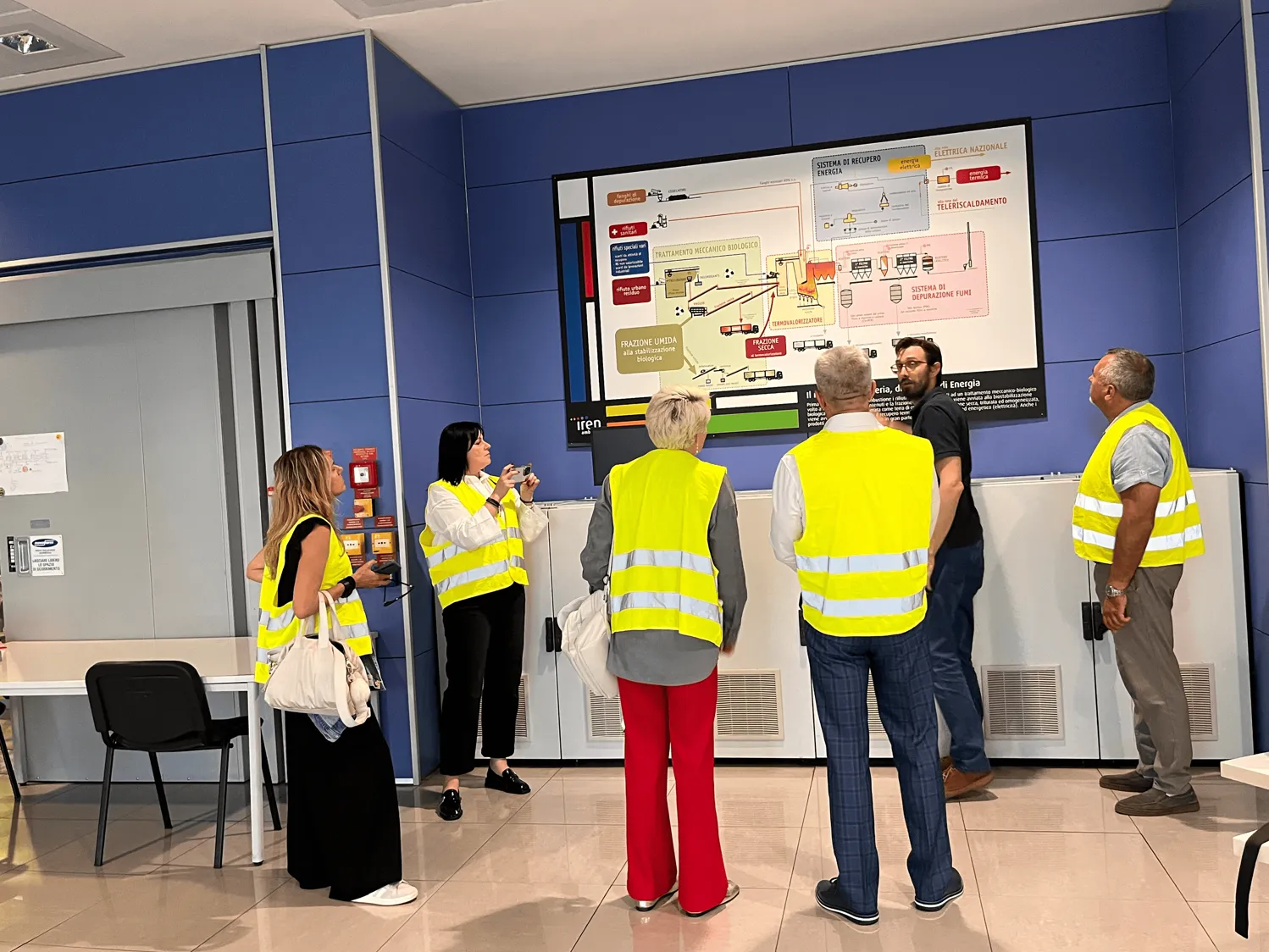
Pervomaisk representatives learn about waste incineration and energy recovery at IREN’s Integrated Environmental Hub (PAIP).
Rather than focusing only on infrastructure, the exchange also explored the practical conditions required to make waste management systems work. Participants discussed residents' responsibilities, relationships with service providers, the expertise needed to operate the system, and the financing and maintenance of infrastructure.
These questions were particularly relevant for Pervomaisk as the city considers how to strengthen its own approach to resource management.
The Ukrainian delegation also shared its experience and current challenges. Discussions included biogas projects aimed at improving the energy independence of the water utility and street lighting system, as well as challenges related to composting and the associated risks of water pollution.
The exchange was therefore two-way: while Pervomaisk explored approaches used in Parma, Parma representatives also gained insights into how waste management and recycling are organised in Ukraine and the specific challenges faced by Ukrainian municipalities.
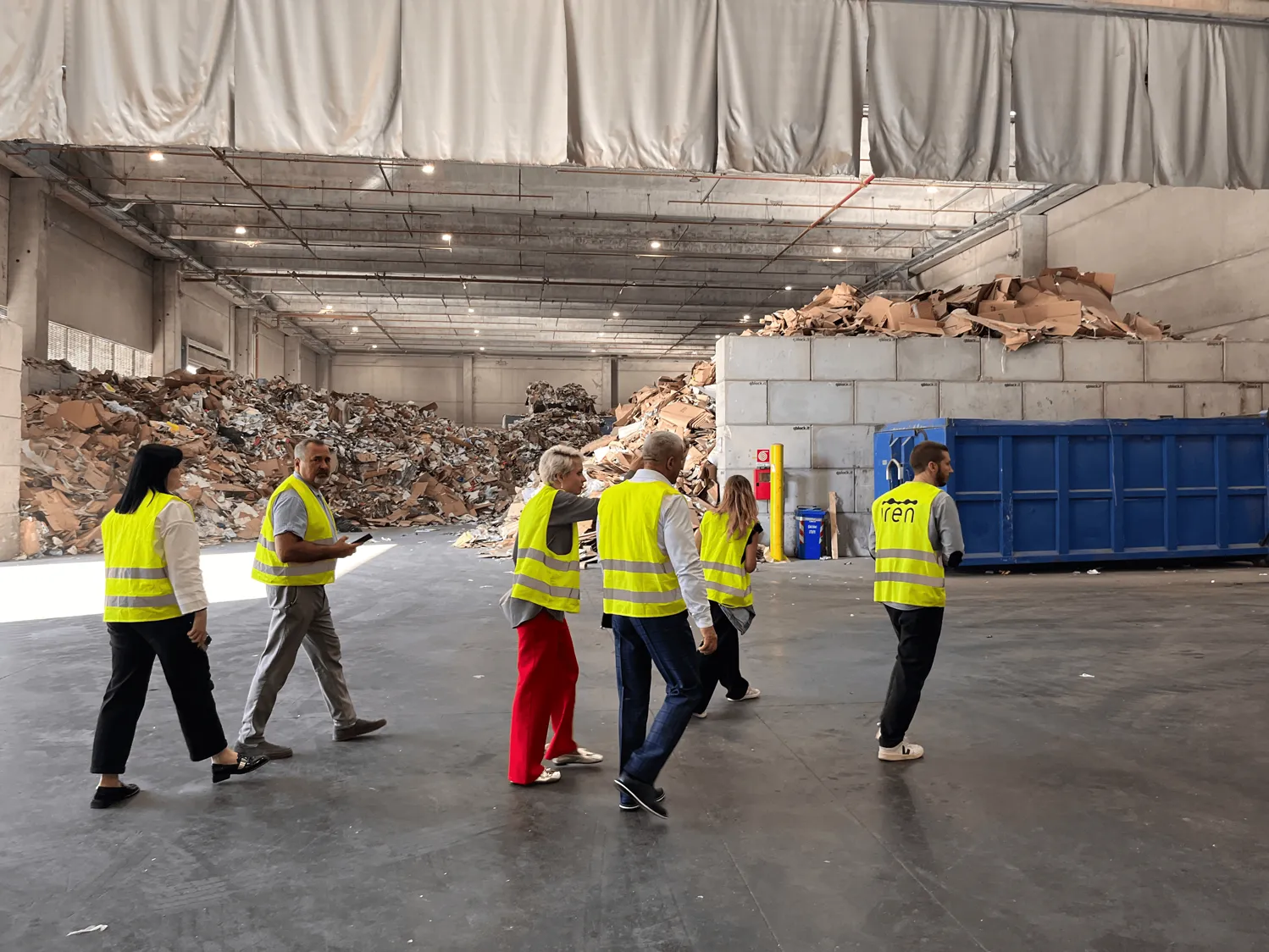
Pervomaisk representatives learn about paper recycling at an integrated waste management and energy recovery facility operated by Iren Ambiente in Parma, Italy.
Building resilient water and wastewater services
Water management was at the heart of the second day of the visit.
At IREN's facilities on Strada Santa Margherita, participants explored how Parma organises its water supply and wastewater services, including the legal and institutional framework behind its mixed-ownership model for water and wastewater utilities.
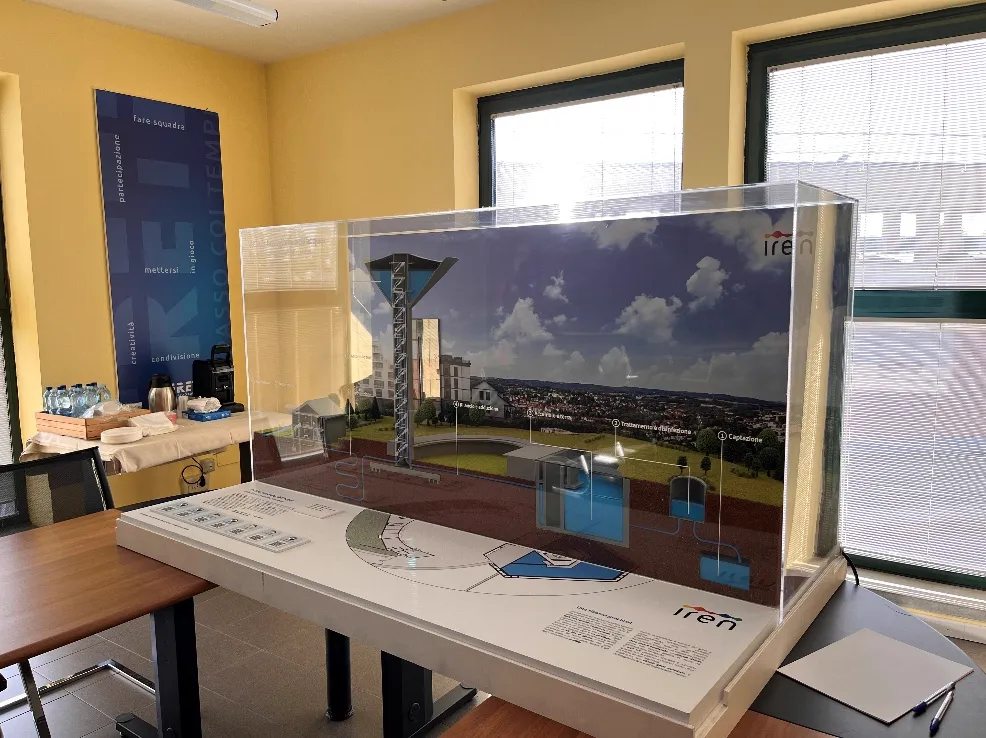
A model illustrating the water purification process at an IREN Group water treatment facility in Parma.
The discussions covered the full water cycle, from drinking water treatment and filtration to distribution and wastewater management. Participants also exchanged views on the practical operation of treatment systems, the use of chemical agents and the management of both sewage and rainwater.
Pervomaisk shared its own experience, including wastewater treatment infrastructure developed with support from NEFCO, with one of the city's new treatment facilities already in operation.
The discussion also brought the realities of wartime infrastructure management directly into the exchange.
The Pervomaisk delegation explained the risks of water contamination resulting from attacks and how the municipality works to maintain critical water infrastructure under these conditions. The two sides discussed power outages, the use of generators to keep essential facilities operating, the costs of maintaining backup power and the environmental implications of generator use.
Despite these challenges, Pervomaisk continues to work towards maintaining a continuous water supply, including introducing water supply schedules when necessary.
For Parma, these experiences offered an important perspective on infrastructure resilience under crisis conditions. For Pervomaisk, the discussions provided an opportunity to explore how different organisational and technical approaches could support the long-term development of its water services.
Preparing for climate change through local action and data
Parma presented its climate action and the Urbreath project, highlighting its approach to climate shelters: places where residents can find relief from extreme heat. These include indoor spaces, such as air-conditioned centres, and outdoor green areas. Beyond protecting people from high temperatures, they can also provide opportunities for social interaction and help address loneliness.
The discussion resonated with the Pervomaisk delegation, which shared the impacts of climate change on its municipality, including temperatures reaching 40°C, agricultural losses, falling river levels and wells drying up. Participants also reflected on changing weather patterns, noting that the snowy and icy winters once familiar to residents are becoming less common.
The exchange also explored how data and mapping can support more effective adaptation. Parma illustrated how assessing routes to climate shelters based not only on distance but also on temperatures along the way can help determine whether they are genuinely accessible during heatwaves. The city also highlighted the importance of cross-sectoral working groups in coordinating local action. These approaches offered Pervomaisk potential inspiration for developing adaptation measures suited to its own challenges and circumstances.
Connecting sustainable agriculture with local communities
The study visit also explored the relationship between sustainable agriculture, local production and climate action.
The Pervomaisk delegation visited Società Agricola Delsante Elvezio e Saverio and Caseificio Cooperativo San Pier Damiani, learning about local agricultural production and cheese-making.
The visit provided an opportunity to discuss sustainable agriculture, resource use and the relationship between agricultural activity and climate change.
For Pervomaisk, where climate change is already affecting agricultural production, the discussions offered another perspective on how local food systems can respond to changing environmental conditions while maintaining their economic and community value.
A partnership built on mutual learning
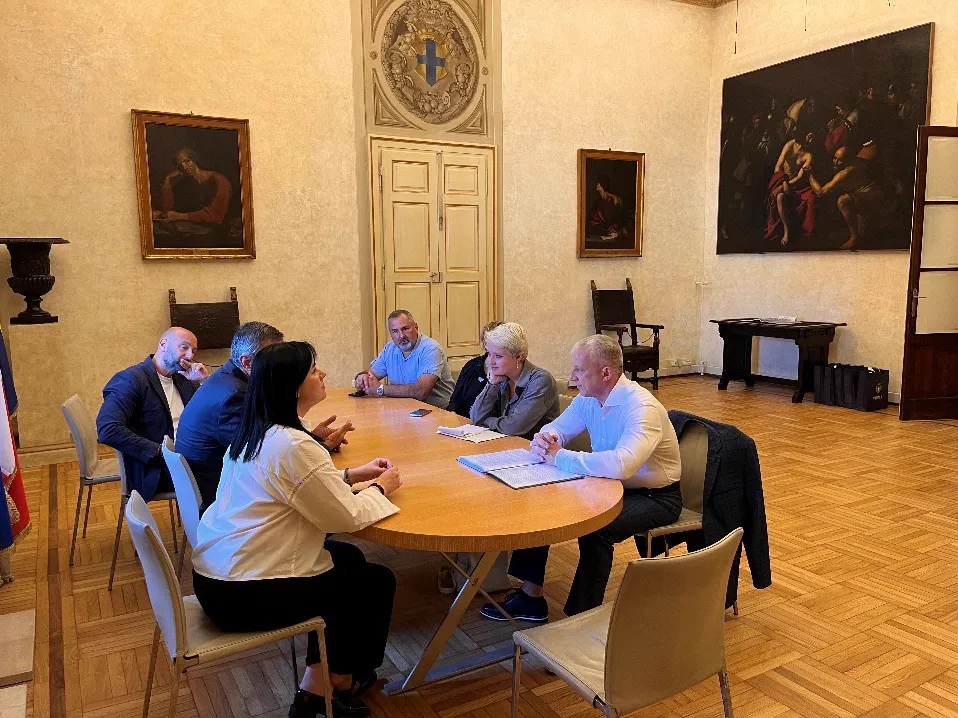
The Pervomaisk and Parma delegations exchange insights about their cities to identify opportunities for cooperation.
Across the three days, the study visit brought together a wide range of topics, from essential infrastructure and resource management to climate adaptation and agriculture. Yet a common theme emerged: sustainable urban development depends not only on individual technologies or projects, but also on the way cities organise, finance and coordinate their actions.
The exchange gave Pervomaisk an opportunity to explore practical approaches used in Parma and consider which elements could potentially be adapted to its own context. At the same time, Parma gained a deeper understanding of the challenges facing a Ukrainian municipality working to maintain essential services while responding to the impacts of war and climate change.
The visit also strengthened the personal and institutional connections between the two cities. Parma reaffirmed its solidarity with Pervomaisk and its willingness to continue sharing knowledge, practices and experience.
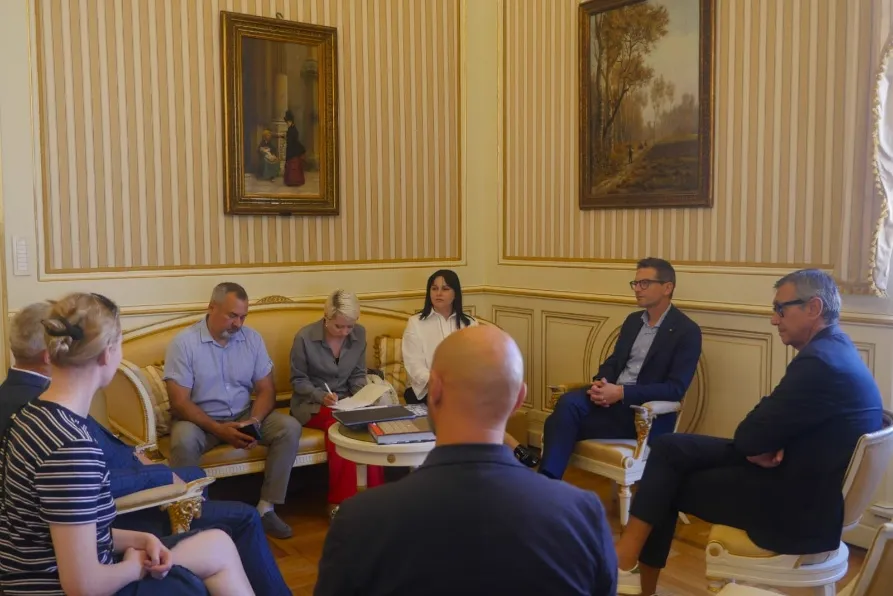
Pervomaisk and Parma delegations discuss the study visit agenda and its objectives at the city hall.
Looking ahead, both sides expressed strong interest in maintaining the partnership and exploring further joint initiatives, including in areas such as youth policy and sport.
The Pervomaisk–Parma study visit therefore represents another step in the SUN4Ukraine Partnership Programme: creating lasting city-to-city relationships where knowledge and experience can move in both directions, helping municipalities learn from one another while developing solutions that respond to their own realities.