
Water rarely makes headlines until it stops running, floods a street, or fails a test. For Dnipro, ensuring it does none of those things is an everyday responsibility made harder by war. That's why, from 14 to 16 July 2026, a delegation from Dnipro traveled to Budapest, as part of SUN4Ukraine’s Partnership Programme, for an intensive study visit focused on urban water management and climate resilience.
Over three days, the delegation moved from utility headquarters to a historic reservoir, from a wastewater treatment plant to city hall, and finally out onto the streets themselves, tracing how one European capital keeps its water flowing, its wastewater clean, and its city cooler and greener in the face of climate change.
Inside Budapest's Water Network
The programme opened at the headquarters of Budapest Waterworks, where the delegation was welcomed by Galina Rabay and Rita Studniczki. They walked participants through the utility's history, governance, and day-to-day operations, while Gábor Göncz, Head of Technical Development, presented the company's international cooperation projects and its work in hydraulic modelling. The discussion centred on how Budapest manages its drinking water supply and what it takes to keep a large urban network resilient.
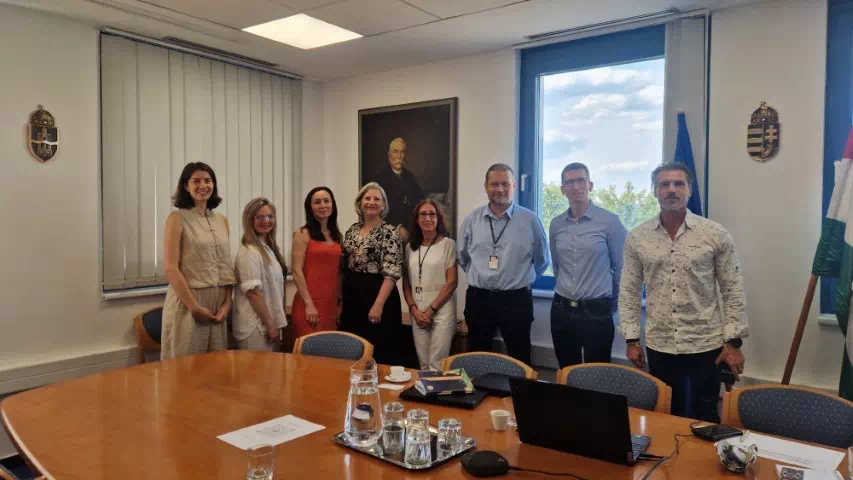
The Dnipro delegation at Budapest Waterworks HQ on day 1, learning about the utility’s history and current operations.
A Reservoir with a Double Life
The second day took the delegation to the Rákosszentmihály Reservoir, one of Budapest's historic water storage sites. Beyond its role in the city's drinking water system, the reservoir doubles as an emergency reserve and, notably, as an educational facility open to visitors. This is a strong reminder that critical infrastructure can also be a tool for public engagement.
From there, the group moved to the Budapest Central Wastewater Treatment Plant, following the journey of water from mechanical and biological treatment through to its final discharge into the Danube. The visit offered a full picture of what it takes to treat wastewater at city scale while meeting strict environmental standards.

Inside the Rákosszentmihály Reservoir, where the delegation learned about its history, day-to-day management and engineering characteristics.
Mapping the City's Climate Risks
On the final day, the delegation was hosted at Budapest's city hall, where GIS expert Tamás Soha demonstrated how the city uses spatial data and mapping tools to support climate adaptation planning, assess risk, and guide evidence-based decisions, from tracking flood exposure to mapZping urban heat islands. Orsolya Barsi followed with a presentation on the broader climate adaptation measures the city is pursuing.
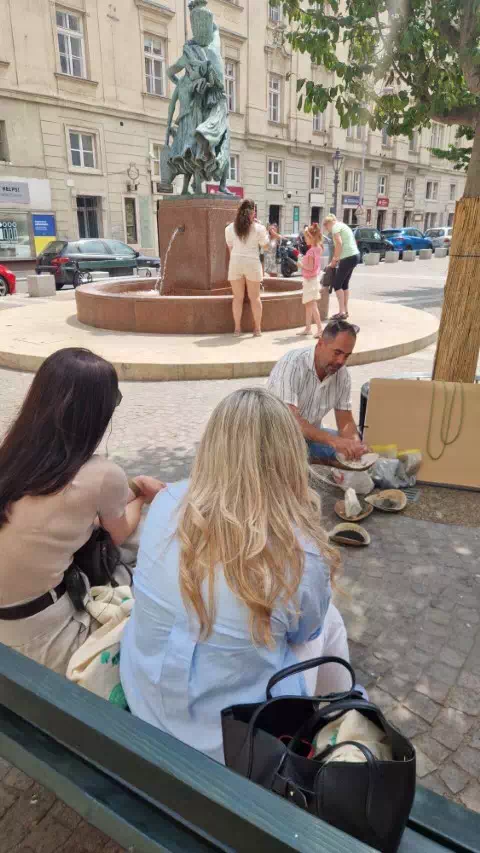
The delegation during a Sponge City walk through Budapest, learning about tree lifespans and how to help trees thrive for longer in urban environments.
Walking Through a Sponge City
The visit to city hall was followed by a guided "sponge city" walk, where a municipal expert showed the delegation nature-based solutions at work across Budapest: permeable surfaces designed to soak up rainfall, and innovative tree-planting techniques (inspired by the Stockholm Method) that use structural soils and underground systems to give trees access to water, oxygen, and nutrients despite the harsh conditions of urban environments. Together, these interventions are helping the city retain water, reduce climate-related risks, and improve public spaces at the same time.
The programme closed with a dinner hosted by Budapest Waterworks' CEO, capping three days of dense technical exchange with a more informal note.
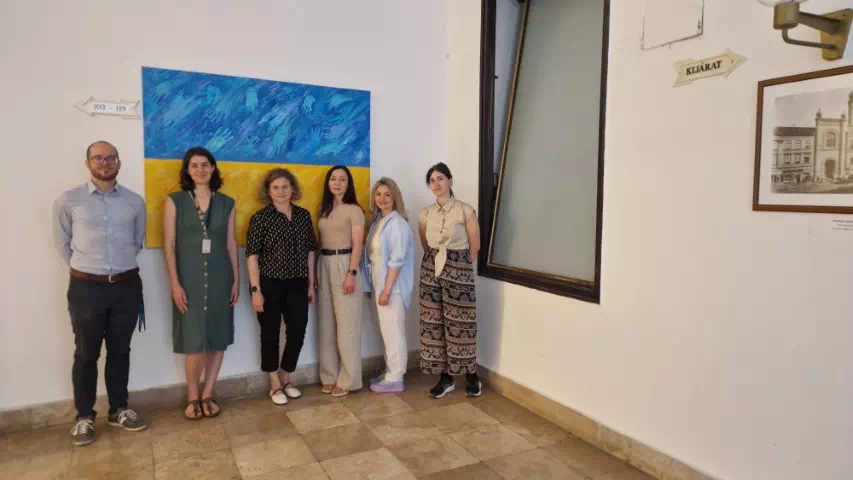
The delegation at Budapest Municipality, learning about mapping and governance procedures supporting sustainability and climate resilience.
Looking Ahead
For Dnipro, the visit underlined a few recurring truths:
- Long-term investment is non-negotiable. Climate adaptation and water infrastructure both depend on sustained funding and, EU support has been decisive in what Budapest has been able to build.
- "Simple" solutions rarely are. Planting a tree or laying a permeable surface sounds easy. At city scale, both are technically demanding.
- Water management works as one system, not three. Drinking water, wastewater, and climate planning need to move together, not separately.
The delegation also left with a practical toolkit: GIS-based planning, sponge city techniques, and a clear-eyed view of the administrative hurdles ahead. Budapest's own experience shows those hurdles are real, but also that they can be overcome. With the right knowledge and partnerships in place, Dnipro is now better equipped to build a more resilient, water-secure future of its own.