
Despite the ongoing war, 24 city representatives from the 12 Flagship Municipalities (FMs) gathered in Warsaw to turn climate neutrality ambitions into concrete action, proving that reconstruction and sustainability can go hand in hand.
The three-day Climate Neutrality Plan (CNP) Technical Workshop, held from April 21 to 23, brought together city delegations with a team of ten domain experts from Arup covering key sectors: energy, transport, buildings, waste and circular economy, water, and green infrastructure. Sessions also included contributions from SUN4Ukraine partners ECOACTION, the Association of Ukrainian Cities, Eurocities and DEMOS Helsinki, as well as learnings from the City of Warsaw.
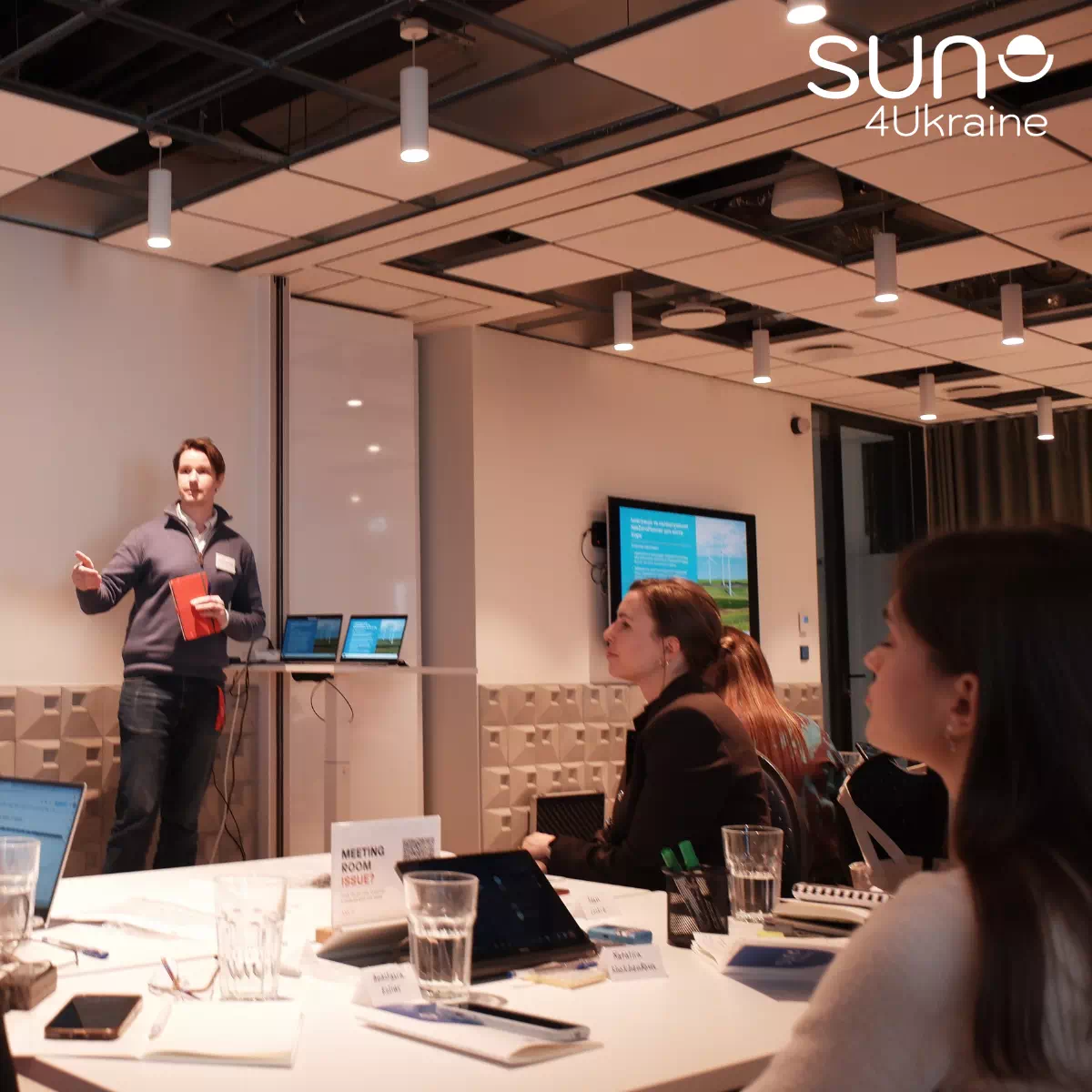
“We are providing guidance and technical support for the establishment of baseline inventory emissions and helping to establish the targets that the cities will be working towards as part of their Climate Neutrality Plans” said Adam Farenden, Project Manager at Arup. “Building on these baseline and target emissions, we are also supporting the development of key mitigation and action areas, helping align these into a portfolio of investable opportunities to liaise with funders and finance institutions to enable implementation”.
A workshop built for doing
The format was practical and the agenda structured to move from diagnosis to action:
- Day one explored the current state of CNP development, surfacing challenges, opportunities and identifying where cities needed the most support. It also provided a briefing on the Ukrainian policy and legislative context shaping climate action and recovery.
- Day two pivoted to strategy, with dedicated one-to-one time between city representatives and sectoral experts to dig into specific priority projects.
- Day three looked forward: drawing on global case studies, exploring resilience and adaptation in post-crisis reconstruction, and discussing citizen engagement approaches and next steps.
The in-person format enabled close collaboration, allowing FMs and experts to work directly on project ideas and exchange feedback in real time.
Learning from experience
Cities also learned from examples shared during the workshop, including experiences on climate mitigation and clean air action.
“What was really interesting was Warsaw’s experience of how they fought for clean air. It’s truly inspiring” said Olena Reznichenko from the Dnipro City Territorial Community. “Overall, these three days were very intense. My head is just buzzing with thoughts”.
For Mykolaiv, the exchange focused on climate planning approaches linked to infrastructure renewal. “It was very interesting to hear about Warsaw’s experience in applying the Blue-Green Index to the social housing they are renovating” said Tetiana Shevichenko from the Mykolaiv City Council.
“For Mykolaiv, as a city undergoing active reconstruction, such case studies are of interest in order to rebuild using the ‘Build Back Better’ principle” she added.
For Kharkiv, the direct interaction with technical experts was a key outcome of the workshop. “What impressed me most about this workshop? It was the opportunity to speak with experts in various fields, exactly the kind of expertise our community needs” said Yana Moskalenko of the Kharkiv City Territorial Community.
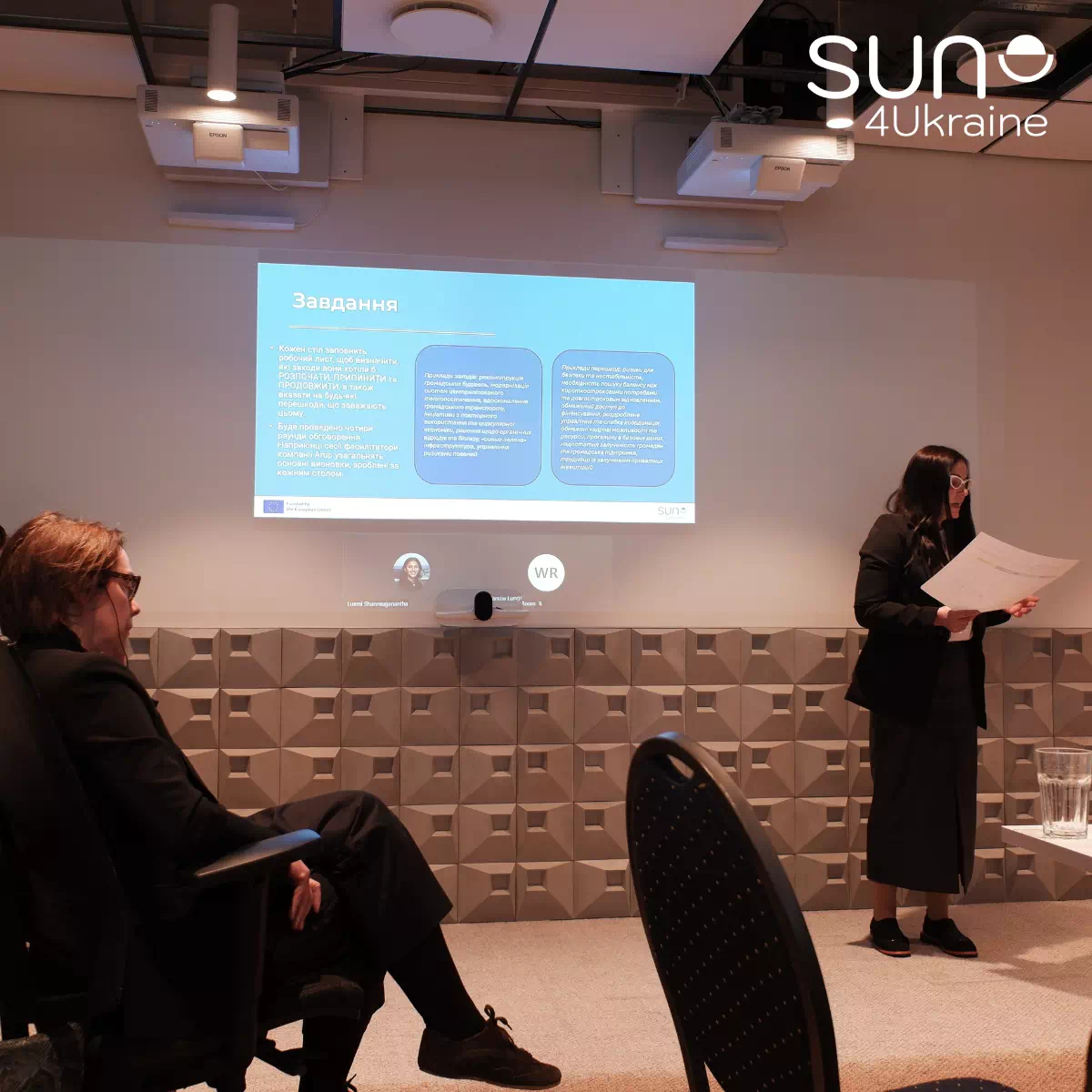
For Chernihiv, the seminar was particularly useful in the context of recovery and reconstruction. “This seminar was particularly useful and informative for the city of Chernihiv”, said Nataliia Kholchenkova of the Chernihiv City Territorial Community. “Our priorities remain energy decentralisation and the use of alternative energy sources, and the knowledge gained is useful for implementing projects now as well as for strategic planning and the development of our Climate Neutrality Plan”. They also highlighted the value of exchanging experiences with European cities and expert input.
Six sectors, one system: CNPs as an integrated planning and investment tool
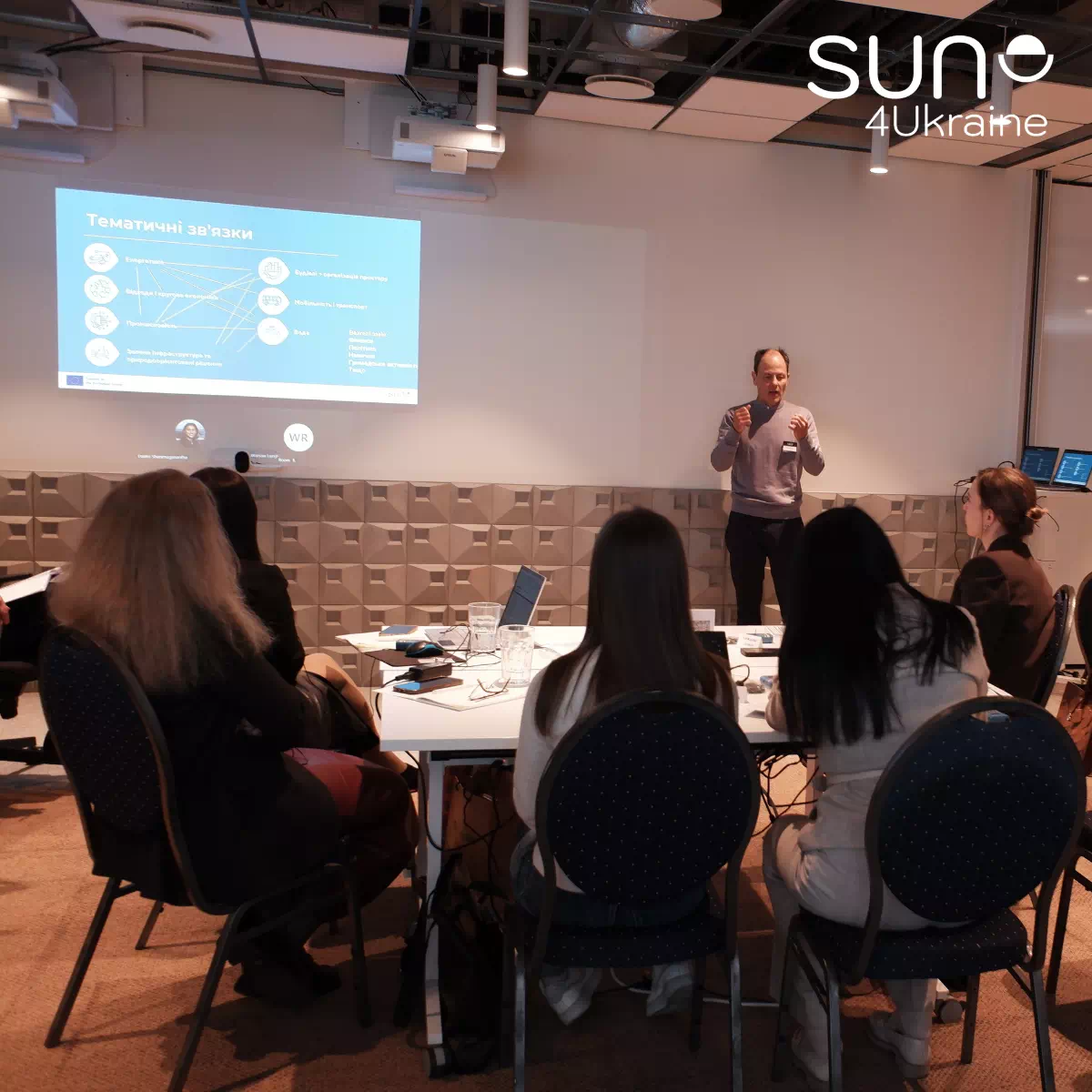
A key theme of the workshop was systems thinking, recognising that climate neutrality requires integrated planning across sectors.
The sectoral experts at the workshop covered:
- Energy systems and supply
- Buildings and related infrastructure
- Mobility and transport
- Water management
- Waste and circular economy
- Green infrastructure and nature-based solutions
CNPs were presented as structured tools to help FMs prioritise actions and prepare investment-ready project pipelines.
The workshop focused on helping Ukrainian municipalities develop these plans through technical input, project clarification, and identification of next steps across mitigation and adaptation priorities.
Citizens at the centre
Technical plans only succeed if residents understand, trust, and feel ownership of them. In the Ukrainian context, where many citizens have more immediate concerns, the workshop highlighted the importance of communicating climate action as part of recovery and community resilience, rather than as an abstract environmental imperative.
Dianna Matsiuk, representant of Vinnytsia City and Territorial Community, emphasised the importance of implementation and awareness-building: “There is a need to disseminate this knowledge among stakeholders, particularly local authorities and community residents, so that there is an understanding of the necessity of these actions”.
What comes next
The Warsaw workshop was not an endpoint. Follow-up sessions between cities and Arup experts are planned, allowing the work in Warsaw to continue at a more granular level.
The broader message is clear: climate action and reconstruction are not competing priorities. The rebuilding of urban infrastructure after conflict can and should be guided by the principles of sustainability, resilience, and liveability.
The task now is to turn plans into projects, and projects into a transformed urban landscape.
Take a look back at the workshop here